
Alley at the Kreuzstege
Station 14
In contrast to the sparsely built-up Michaelisstraße, where patricians and wholesalers lived, the area along the Gera river was more densely developed. Here, too, Christians and Jews lived side by side, but in much closer proximity. The entrance to the mikveh and the cemetery of St Benedict’s Church were also located here.
Four butcher’s stalls belonging to the Jewish community can be traced back to this area from 1332 at the latest: In that year, Heinrich von Bibra, the administrator of the archbishop of Mainz, compiled a list of the archbishop’s income following research in old registers, in which he also listed revenue amounting to 40 denarii from the Jew’s butcher’s stalls.
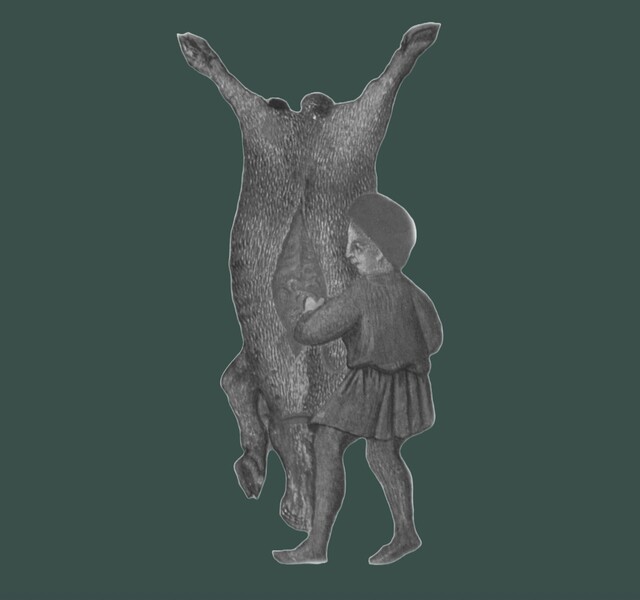
At the Jewish butcher’s stalls, Jews could obtain kosher-slaughtered meat. Non-kosher parts of the slaughtered animals – e.g. the hindquarters – were sold to Christians. The source from 1332 also provides information on this: Jews were required to sell meat that was unusable to them due to dietary laws ‘under the Jew’s hat’. This probably referred to a specific market section – or did it stipulate that the seller had to identify himself by wearing a Jew’s hat?

